New Popular Pharmacy Design In 2025
Color matching
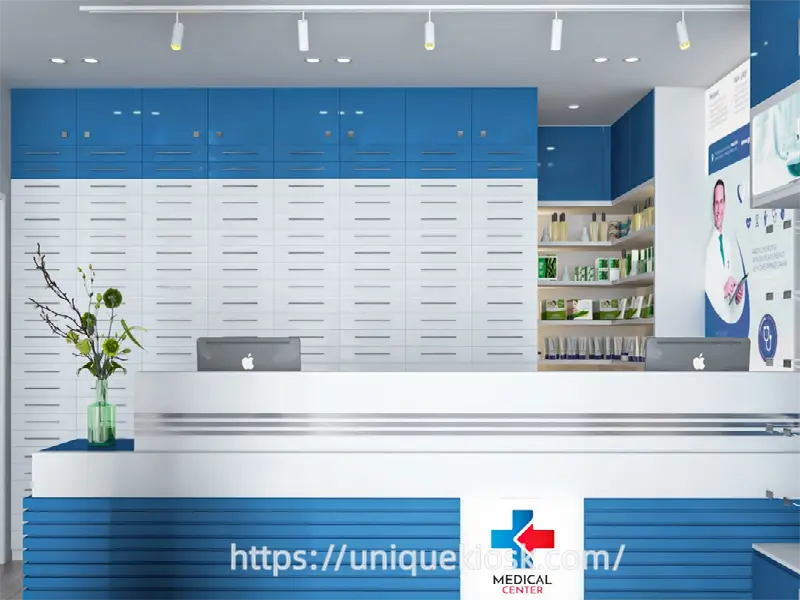
Entering this pharmacy, the first thing that catches the eye is the color combination dominated by blue and white. Blue, as a classic color in the medical industry, has profound connotations. It often gives people a sense of calmness and professionalism, as if it could convey a trustworthy force, which is in line with the medical industry’s pursuit of professionalism and reliability. When customers step into a pharmacy and see the large area of blue, they will naturally feel a sense of security psychologically, as if every corner here has been professionally considered and can provide reliable protection for their health needs. White, on the other hand, symbolizes purity and hygiene, which highly echoes the clean and safe environmental concept that pharmacies pursue. The use of white makes the entire space appear bright and transparent, as if it could dispel the gloom in people’s hearts caused by physical discomfort.
The two colors complement each other without too many fancy hues to interfere, creating a simple, comfortable, and professional medical atmosphere. This enables customers to calm down instantly and sets a peaceful tone for subsequent activities such as purchasing medicine. It seems that as soon as one enters here, both the body and mind can be relieved to a certain extent.

Spatial layout
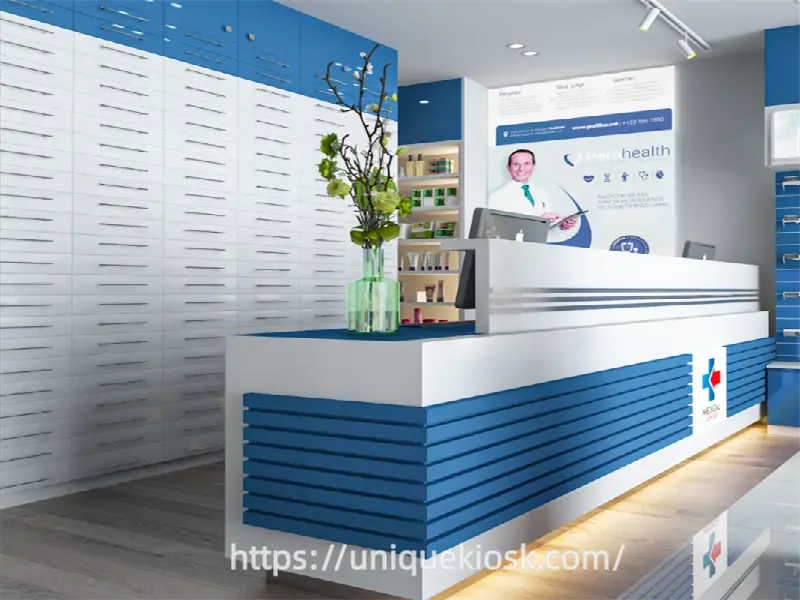
The spatial layout of the pharmacy has been meticulously planned, and every detail reflects the emphasis on customer experience. A spacious reception area is set up at the entrance, and the front desk is simple and elegant with smooth lines. Here, staff can quickly provide guidance, consultation, and other services to customers. Whether it’s a new visitor who doesn’t know how to find medicine or a customer with specific health questions to consult, they can all receive initial assistance here. Further inside is the medicine display area, where medicines of different functions and categories are orderly divided and placed in different zones.
Commonly used medicines, over-the-counter drugs, etc., are placed in prominent and easily accessible positions. The height of the shelves is also designed to facilitate customers of different heights to take and put them away easily. Prescription drugs and the like are placed in relatively standardized areas in accordance with relevant regulations to ensure the strictness of drug management. This layout not only facilitates customers quickly finding the medicines they need based on their own requirements, saving the time spent blindly searching in the store, but also makes it easier for staff to manage and serve, greatly enhancing the convenience and efficiency of the entire pharmacy operation and ensuring that every drug purchase process can proceed smoothly.
Display design
The display design of the medicines is very meticulous, striving to enable customers to clearly and quickly understand the information about the medicines. The shelves adopt a combination of transparent glass and simple cabinet bodies. Transparent glass enables customers to clearly see the appearance and packaging of the medicine from all angles, while the simple cabinet provides stable and tidy support. All kinds of medicines are neatly placed on the shelves. The labels are clear and explicit, marking key information such as the names, functions, and prices of the medicines. The font size is moderate, which is convenient for customers to read. Such a display enables customers to have a basic understanding of the medicines without asking too many questions, facilitating their independent choices.
Meanwhile, for some special or recommended drugs, they were also highlighted. Through auxiliary means such as lighting, these drugs stood out among numerous products and attracted customers’ attention. This display method not only reflects the professionalism of the pharmacy, allowing customers to feel the pharmacy’s dedication to drug management, but also provides customers with more intuitive shopping guidance, reducing the confusion of choice.

Lighting application
Lighting plays a finishing touch role in the design of pharmacies, ingeniously enhancing the visual effect of the entire space and the customer experience. The entire store adopts a soft and bright lighting system to ensure that every area has sufficient light, avoiding the sense of oppression caused by insufficient light. In the medicine display area, specific lights shine precisely on the medicines. The angle and brightness of the light have been adjusted, which not only highlights the appearance of the medicines, making them look newer and more textured, but also enables the labels on the bottles to be displayed more clearly under the lights.
Moreover, it allows customers to view the details of the medicines more clearly, such as their ingredients and usage instructions. In areas such as the reception area, the lighting creates a warm atmosphere. The warm-toned light gently spills over the space, making customers feel more comfortable and relaxed when communicating with the staff, as if they were having a heart-to-heart talk with a friend. This greatly enhances the overall consumption experience, allowing customers to feel at ease every moment they stay in the pharmacy.
Detailed decoration
While emphasizing functionality, pharmacies have not neglected detailed decoration either. These details add much vitality and humanistic care to the pharmacy. Fresh green plants are placed at the front desk, beside the shelves, and in other locations. The emerald green branches and leaves stand out particularly in the space dominated by blue and white tones, adding a touch of vitality and vigor to the simple space and alleviating the possible sense of seriousness that the medical space may bring.
Looking at these vibrant green plants, customers’ moods can also become more cheerful. In addition, there might also be some small decorative paintings, mostly related to health and nature, further creating a warm and comfortable atmosphere. These detailed decorations convey the pharmacy’s humanistic care for customers, making them feel that this is not only a place for selling medicines but also a warm space that pays attention to people’s health and feelings.

Brand display
The pharmacy also sets up a brand display area, which comprehensively showcases the brand concept, service items, and professional qualifications of the pharmacy through posters, publicity boards, and other forms. For instance, display photos and brief introductions of professional medical teams to let customers know that the personnel serving them are experienced, professional, and reliable. Display high-quality drug supply channels to let customers know that the drugs in the pharmacy are from regular sources and of guaranteed quality.
At the same time, there may also be some positive reviews from customers on display. Genuine evaluations can enable new customers to have a more intuitive understanding of the service level of the pharmacy. These brands display content that enables customers to have a deeper understanding of the professionalism and reliability of the pharmacy, thereby enhancing their trust in the pharmacy. This helps cultivate customer loyalty and also helps establish a more distinct and professional brand image of the pharmacy in the minds of customers, so that when customers have health needs, they will think of this pharmacy first.

Expansion of functional areas
In addition to the traditional medicine sales area, this pharmacy has also actively expanded its functional areas to meet customers’ diverse health needs. A health consultation area has been set up, equipped with comfortable seats and professional consultation equipment. Customers can have one-on-one communication with professional pharmacists here to consult about medication knowledge, health care, and other issues. Pharmacists will patiently answer customers’ questions and provide personalized health advice based on their physical conditions and needs.
In addition, there may also be simple testing areas that can provide customers with basic health testing services, such as blood pressure measurement and blood sugar testing. Customers can take advantage of these services to promptly understand their basic health conditions. Combined with the pharmacist’s advice, they can better manage their health. These expanded functional areas have diversified the services of pharmacies, no longer limited to selling medicines. Instead, they can provide customers with one-stop services ranging from health consultations to basic tests, further enhancing the appeal of pharmacies and allowing customers to feel the all-around care for their health provided by pharmacies.