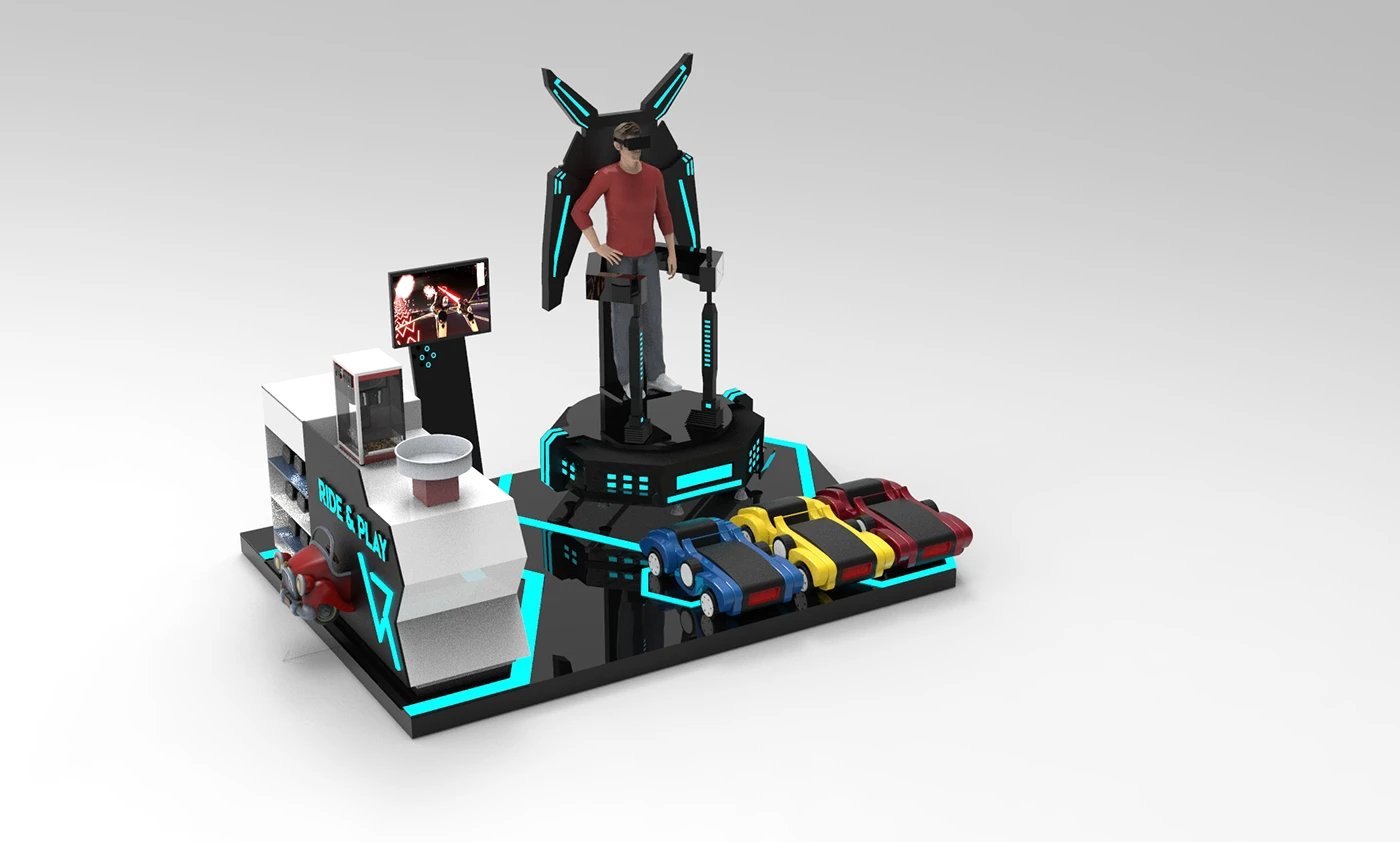
Virtual Reality (VR) is an immersive technology that uses head-mounted displays (HMDs), motion tracking sensors, and interactive hardware to simulate a three-dimensional, computer-generated environment. VR creates a sense of presence—users feel like they are inside the virtual world. VR kiosk is a high-impact, low-risk way to enter the experiential entertainment market, especially in prime mall locations, offer an extremely lean business model.

Why Launch VR Kiosk in Mall
First, malls provide built-in foot traffic and captive audiences. Unlike standalone arcades, which rely on customers making a special trip, VR mall kiosks capture impulse traffic from shoppers of all ages. Second, VR kiosks offer low operational overhead compared to full-size arcades. A typical custom VR kiosk occupies 10–20 square meters of floor space, fitting within standard mall kiosk or inline store footprint requirements. Third, mall operators actively seek “experiential tenants” to drive foot traffic and differentiate their centers from online shopping. For operators, this translates to flexible lease agreements and access to prime locations.

Cashier Counter & Floor
For the VR kiosk, besides the machines themselves, we can customize and produce the reception counter and flooring. We customize the counter and floor size, shape and layout to match kiosk footprint. The counter use MDF with painting finish, integrates hidden cable routing, built-in storage for VR headsets and controllers, and brand logo display. For VR kiosk flooring, it is use plywood material with PVC finish, with defined safety boundary marking to prevent user collision. We also handle integrated floor wiring concealment, avoiding exposed cables and meeting mall safety codes.

Brand Customization and Scalability
Every VR kiosk we produce is fully customizable to match an operator’s brand identity and business goals. Options include:
– Custom color schemes, logos, and graphics to align with franchise or independent brand standards.
– Modular layouts that can be expanded (adding more ride-on cars or VR stations) as the business grows.
– Themed add-ons, such as photo booths, snack stations, or party booking counters, to increase revenue opportunities.
– Accessibility modifications, including ramps and wheelchair-accessible ride-on cars, to meet ADA standards and expand the customer base.