
Steps to Decorate Jewelry Store in the UK
The United Kingdom’s jewelry market is a unique blend of centuries-old tradition and cutting-edge contemporary design. Decorating a jewelry store is a critical business strategy. Involves creating a secure, inviting, and brand-coherent environment. It builds customer trust and amplifies the inherent value of your products. This is the physical manifestation of your brand’s story, values, and promise of quality.
A well-executed store design does several jobs simultaneously. It attracts the right clientele, provides an intuitive and comfortable shopping journey, employs rigorous security measures without feeling intrusive, and make every jewelry piece look best. For the UK market, this also means understanding the nuances of local consumer behaviour, architectural constraints of often older, listed buildings, and the competitive landscape.
Step 1: Plan and Brand Definition
The most crucial phase of decorating your jewelry store is foundational planning. It involves a deep and objective analysis of your target market, your unique brand identity, and the practical constraints of your physical location. Who are you selling to? A young, fashion-forward crowd in Shoreditch looking for trendy, accessible pieces has vastly different expectations than an established, affluent clientele in Chelsea seeking high-value, one-of-a-kind estate jewelry. Your brand’s core message must be the north star for every subsequent design decision.
Review security requirements is non-negotiable in the UK jewelry trade. Dictating the specifications for glazing, door and window fortifications, alarm systems, and the placement of panic rooms. Establish a realistic budget allocates funds for furniture and finishes, high-quality security installations, professional lighting design, and a contingency fund for unforeseen issues.
Our professional design team can help with interior design in luxury retail or jewelry spaces. A specialized retail lighting ensure your products are showcased perfectly. Meticulously defining your brand, understanding your market, integrating security from the outset, setting a realistic budget helps to create a solid strategic foundation. This upfront work prevents costly changes, ensures regulatory compliance. Guarantees every choice thereafter is intentional and effective.

Step 2: Layout and Customer Flow
Your jewelry store layout guides the customer experience. It is a powerful tool that manages traffic, enhances security, and strategically exposes shoppers to your most valuable collections. In the UK, where retail space, particularly in prime locations, comes at a premium, an efficient and intelligent floor plan is a commercial necessity. Create a logical, comfortable journey from the moment a customer enters to the moment they leave. The entrance should be inviting and secure, often involving a vestibule or a double-door system. Acts as a psychological and physical transition from the public street to your exclusive environment.
- Display cases placement. High-value items should be positioned in the “sweet spot”—areas easily viewed by staff and within a secure zone, often towards the back or centre of the store. Encourages customers to move deeper into the space. Create clear, wide aisles to prevent a cramped feeling and allow multiple customers to browse different cases comfortably. The consultation area, arguably the most important zone for closing high-value sales, should be a semi-private or private space. Offering a sense of discretion and luxury where customers can discuss significant purchases without feeling exposed or rushed.
- Operational flow. The design must facilitate easy access to safes, stockrooms, and POS systems without disrupting the customer experience or compromising security. The journey from the secure stock area to the display case should be streamlined. Additionally, incorporate “pause points” or focal areas within the layout. This could be a central display featuring a thematic collection, a piece of art, or a digital screen telling your brand’s story. These elements break up the sightlines, add visual interest. A well-designed layout feels intuitive and effortless to the customer.
Step 3: Lighting and Atmosphere
In a jewelry store, lighting is the most important factor in making your merchandise sparkle and appeal to customers. Exceptional lighting can elevate even a modest piece into an object of desire. Create a layered lighting scheme that combines ambient, accent. Task lighting to build a warm, inviting atmosphere while ensuring every gemstone and metal surface is shown to its absolute best advantage. In the UK, a warm, soft ambient glow is essential, making the store feel like a luxurious and comforting haven.
Accent lighting is your primary tool for dramatizing and highlighting the jewelry itself. This is achieved through precise, adjustable track lighting or spotlights fitted with high-CRI (Colour Rendering Index) LEDs. A CRI of 90+ is essential for jewelry, as it accurately reveals the true colour and fire of gemstones without any unsightly colour casts. The colour temperature (measured in Kelvins) is equally critical. A warmer white light (2700K-3000K) is typically most flattering for gold and rose gold, enhancing their warm tones, while a slightly cooler white (3500K-4000K) can make platinum and white gold appear brighter and more brilliant.
Task lighting focus on the point of sale and consultation areas. When a customer is deciding on a significant purchase, they need to see the item in impeccable, clear light. Dedicated, glare-free task lamps at consultation desks allow for detailed inspection and are crucial for building confidence in the product’s quality. Furthermore, consider integrating flexibility into your lighting design. Dimmable systems allow you to alter the atmosphere throughout the day or for different events.
Step 4: Materials, Colours, and Finishes
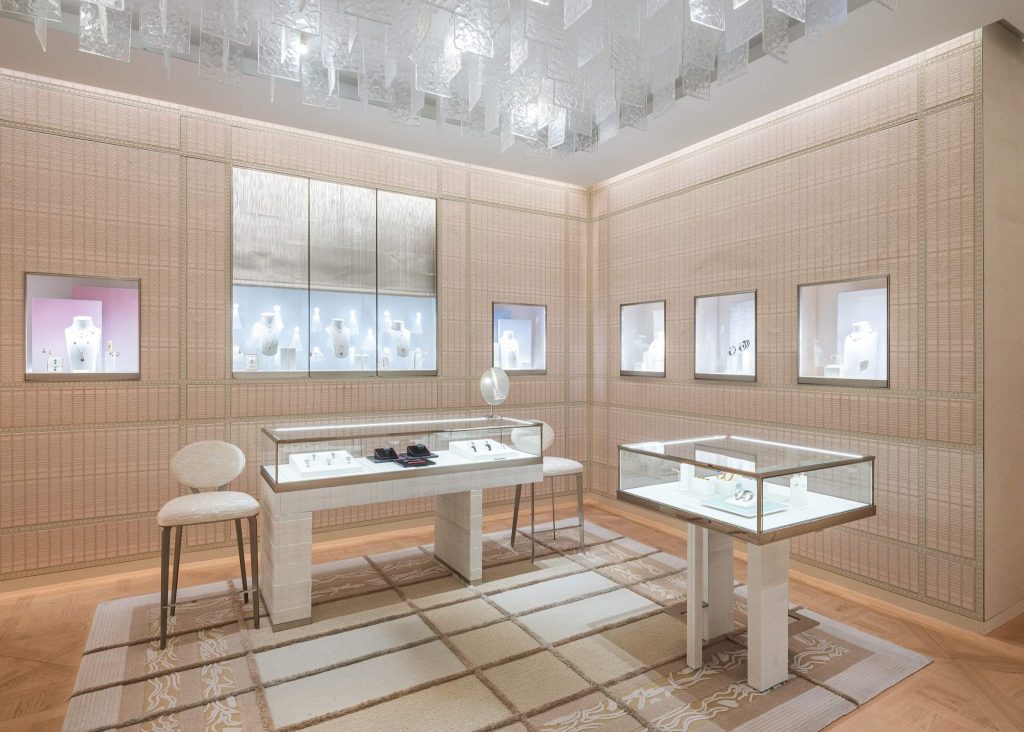
The materials and colour palette for your jewelry store interior are fundamental in communicating brand’s quality and ethos. Every surface, from the flooring to the ceiling, acts as a backdrop against which your products are judged. The principle here is that the environment should complement the jewelry. Neutral, sophisticated, and tactile materials tend to work best, creating a sense of timeless elegance. Think about the texture of a honed marble floor, the rich grain of a dark stained oak, the sleek modernity of lacquered panels, or the industrial chic of polished concrete.
The colour scheme should be carefully considered to enhance the merchandise. Typically, a neutral base palette of whites, greys, taupes, and warm beiges provides a calm and luxurious canvas. These colours reflect light well, helping to maintain a bright atmosphere, and they ensure that the focus remains squarely on the jewellery within the cases. Pops of a richer, brand-aligned colour can be introduced through feature walls, upholstery on seating, or art pieces to add depth and character.
The finishes on your display cases and furniture are particularly important. The choice of material for the caseline will define the store’s character. Whether it’s a classic hardwood, a sleek metal like bronze or brushed brass, or a high-gloss laminate. The internal lining of display cases, often velvet or suede, must be selected in a colour that contrasts with the jewelry to make it stand out. black and dark grey are classic choices for diamond and platinum pieces, while warm cream or taupe can be more flattering for yellow gold.
Step 5: Final Touches
The final step in decorating jewelry store is the implementation of visual merchandising (VM) and experience-enhancing. It’s the space transforms from a beautiful interior into a dynamic commercial environment. Actively drives sales. Visual merchandising is the art of presenting your products in a way that is aesthetically pleasing and commercially astute. It begins with your window display, your most powerful tool for attracting footfall on a busy UK high street. Changed it frequently to maintain freshness, and lit dramatically to stop passers-by in their tracks. Inside, the merchandising within each display case should be curated and uncluttered. Group items thoughtfully by collection, metal type, or style theme. Use tiered stands, busts, and trays to create height and variation, making the case easy to scan and visually engaging.
Beyond the cases, consider how you can engage multiple senses to create a memorable brand experience. Ambient, brand-appropriate music played at a subtle volume can enhance the atmosphere significantly. The subtle scent of the store can leave a powerful subliminal impression of luxury and cleanliness. The tactile experience is also crucial. The weight of the store door, the feel of the consultation desk surface, the comfort of the customer chairs, and even the quality of the champagne flute offered all contribute to a perception of quality and value. These sensory details reassure customers that they are in a professional, high-end establishment.
Finally, this step includes integrating technology and staff amenities seamlessly. Digital screens can be used to showcase craftsmanship videos, designer profiles, or social media feeds, adding a dynamic layer to your brand story.Ensure your staff have a well-designed, functional back-of-house area and a discreet but efficient POS station. Happy, comfortable staff provide better service, which is the ultimate customer experience.


