How to Create Eye-Catching Jewelry Displays
Creating an eye-catching jewelry display is essential for attracting customers, increasing sales, and enhancing brand perception. Whether you’re setting up a retail store, a boutique, or an online shop with high-quality product images. An effective display can make all the difference.
This guide covers everything from selecting the right materials to arranging jewelry in a way that maximizes visual appeal. We’ll explore lighting techniques, color coordination. Display structures highlight your pieces while maintaining a professional aesthetic.
1. Choosing the Right Display Materials
The foundation of an attractive jewelry display lies in selecting high-quality materials. The right materials enhance the look of your jewelry and ensure durability and functionality.
Jewelry displays should complement your pieces without overshadowing them. Common materials include acrylic, wood, velvet, and metal. Acrylic is a popular choice for its sleek, modern appearance. While wood offers a rustic, organic feel. Velvet-lined displays add a touch of luxury. Making them ideal for high-end jewelry.
Consider the weight and size of your jewelry when choosing materials. Heavy statement necklaces may require sturdier stands. While delicate rings look best in soft-lined trays. Additionally, opt for materials that resist scratches and wear. Especially if your display will be handled frequently.
Sustainable materials like bamboo or recycled metals appeal to environmentally conscious consumers. Brands that prioritize eco-friendly displays can leverage this as a unique selling point in their marketing strategy.
2. Effective Lighting Techniques for Jewelry Displays
Lighting plays a crucial role in making jewelry sparkle and stand out. Poor lighting can make even the most exquisite pieces appear dull. While strategic illumination enhances their brilliance.
Natural vs. Artificial Lighting. Natural light is ideal for showcasing jewelry’s true colors, but it’s not always available. LED lights are the best alternative—they emit minimal heat and provide bright, consistent illumination. Avoid fluorescent lighting, as it can distort colors and create unflattering reflections. View glass showcase design
Spotlighting Key Pieces. Use focused lighting to highlight high-value items like diamond rings or gemstone necklaces. Adjustable track lighting or LED spotlights can direct attention to specific pieces. Creating a dramatic effect.
Avoiding Glare and Shadows. Position lights at angles that minimize glare. Especially for polished metals. Soft, diffused lighting reduces harsh shadows. Ensuring every detail of the jewelry is visible. Backlit displays can also add depth, making gemstones appear more vibrant.
3. Color Coordination and Theming
A well-coordinated color scheme enhances visual appeal and reinforces brand identity. The right colors can evoke emotions, influence purchasing decisions. Create a cohesive shopping experience.
- Complementary vs. Contrasting Colors. Neutral backgrounds (white, black, or gray) allow jewelry to take center stage. However, contrasting colors (like deep blue for gold jewelry) can make pieces pop.Luxury buyers may prefer minimalist tones. While younger shoppers might respond to bold, vibrant backdrops.
- Seasonal and Thematic Displays. Rotate displays based on seasons or holidays. Pastel tones work well for spring. Rich burgundies and golds suit winter collections. Themed displays (e.g., bohemian, vintage, modern) can also attract niche markets.
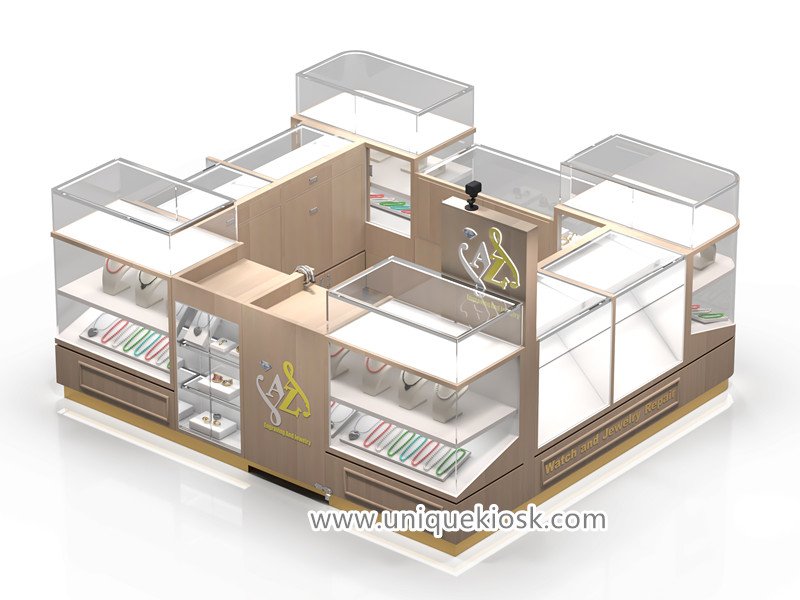
- Brand Consistency. Ensure your display aligns with your brand’s logo, packaging, and overall aesthetic. Consistent branding builds trust and makes your jewelry instantly recognizable. Check jewelry kiosk design
4. Strategic Arrangement and Layout
How you arrange your jewelry impacts customer interaction and sales. A cluttered display overwhelms shoppers. A well-organized layout guides them effortlessly.
Necklaces, rings, and earrings should each have dedicated sections. Group similar styles together. For example, stackable rings in one tray and statement pieces in another. This makes browsing easier and encourages multiple purchases.
Use tiered stands or risers to create visual interest. Elevating certain pieces draws the eye and maximizes space. Avoid flat layouts, as they lack dynamism. Get more ideas about perfume kiosk style
Allow customers to touch and try on jewelry when possible. Mirrors, try-on stations, and open trays invite engagement. Increasing the likelihood of a sale.

5. Maintaining and Updating Displays Regularly
A neglected display can deter customers. Regular maintenance ensures your jewelry always looks its best.
Daily Cleaning and Polishing. Dust and fingerprints can dull jewelry quickly. Wipe down displays daily and polish pieces to maintain their shine.
Refreshing Merchandise. Rotate inventory to keep the display fresh. Feature new arrivals prominently and retire overexposed items to maintain customer interest. Find more watch kiosk option
Gathering Customer Feedback. Observe how shoppers interact with your display. Adjust layouts based on what attracts the most attention or what gets overlooked.