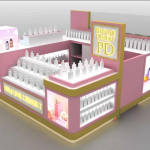
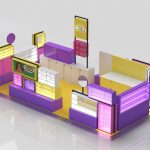
How to Build a Perfume Display Kiosk in Exhibition
Building a perfume display kiosk for an exhibition is a multi – faceted process that requires careful planning, creative design, and precise construction. By following these steps, our customized commercial furniture factory can create a kiosk. That not only showcases the perfumes effectively but also enhances the brand’s image and leaves a lasting impression on exhibition attendees.

Initial Concept and Planning
Understanding the Brand and Perfume Line
Before starting the construction of a perfume display kiosk for an exhibition, it’s essential to have a deep – seated understanding of the perfume brand. Each perfume brand has its unique identity, whether it leans towards luxury, modernity, or a traditional aesthetic.
The perfume line itself also plays a crucial role. If the brand offers a wide variety of scents, from floral to woody, the perfume kiosk should design to showcase this diversity effectively. Consider the target audience as well. A brand targeting young professionals may want a perfume kiosk that is both stylish and functional, with easy – to – navigate displays and interactive elements. While a brand focused on an older, more discerning clientele might prioritize a more subdued, elegant, and sophisticated presentation.
Researching the Exhibition Venue
The exhibition venue has a significant impact on the design and construction of the kiosk. Factors such as the size of the allocated space, the layout of the exhibition hall, and the footfall patterns need to be taken into account. Visit the venue in advance if possible, or obtain detailed floor plans and information from the exhibition organizers.
If the venue has a high – traffic area, the kiosk should design to catch the eye of passers – by. This could involve using bold colors, large – scale signage, or unique architectural features. On the other hand, if the space is more confined or located in a quieter part of the exhibition. The focus might shift to creating a more intimate and inviting atmosphere, perhaps with softer lighting and a more enclosed layout.
Setting a Budget
Establishing a realistic budget is a cornerstone of building a successful perfume display kiosk. The budget should cover all aspects, including materials, labor, design, transportation, and installation. It’s important to prioritize spending based on the key elements that will enhance the brand’s presence. For example, investing in high – quality display shelves that can showcase the perfume bottles in the best light may be more critical than splurging on elaborate but non – essential decorative elements.
Design Phase
Sketching the Initial Design
Begin the design process by sketching out rough ideas. These initial sketches should incorporate the brand’s identity, the available space, and the budget constraints. Consider the overall shape and layout of the kiosk. A common approach is to have a central display area for the perfumes, flanked by areas for customer interaction, such as seating for consultations or sample testing.
The design should also take into account the flow of traffic. Ensure that there is enough space for customers to move around comfortably, pick up samples, and engage with the sales staff. Incorporate elements like shelves, cabinets, and display cases in a way that maximizes the visibility of the perfume bottles while maintaining an uncluttered look.
Incorporating Branding Elements
Branding is key in a perfume display kiosk. The brand logo should prominently display, whether it’s on the facade of the kiosk, on signage, or integrated into the display elements. Use the brand’s color palette throughout the kiosk. This could be in the form of paint on the walls, upholstery on seating, or the color of the display shelves.
Typography is another important aspect of branding. Use the brand’s official font for all signage and informational materials. Additionally, consider incorporating elements that are unique to the brand. Such as a signature pattern or motif, into the design of the perfume kiosk, perhaps as a decorative border or as part of the display fixtures.
3D Modeling and Visualization
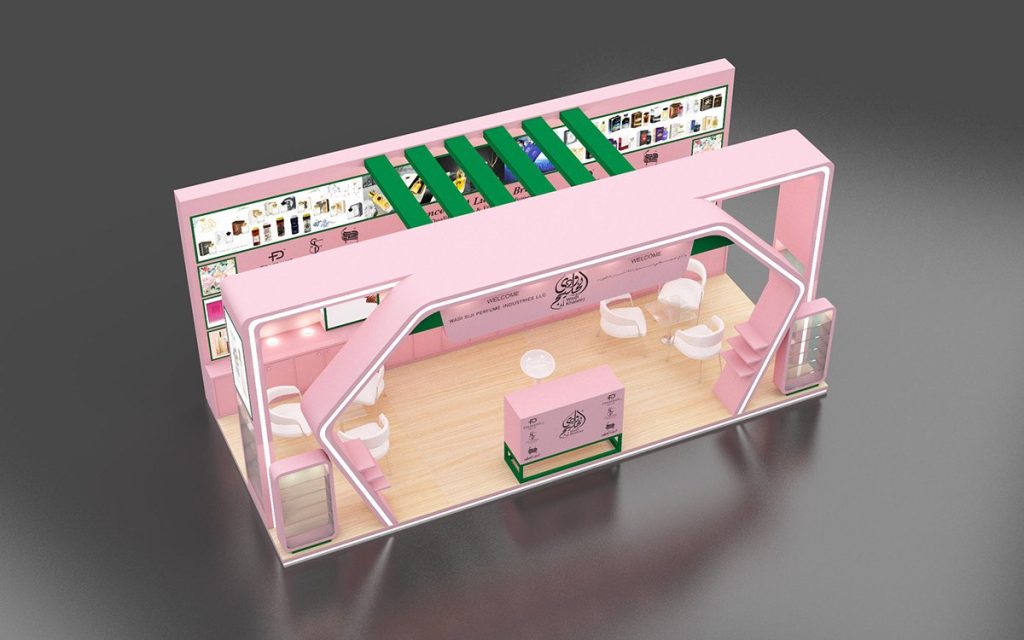
Once the initial sketches are refined, create a 3D model of the kiosk using specialized design software. This 3D model provides a more accurate representation of how the perfume kiosk will look in the exhibition space. It allows for a better visualization of the spatial relationships between different elements. Such as the placement of shelves, the height of the counter, and the overall proportion of the kiosk.
The 3D model can also use to test different lighting scenarios, helping to determine the best way to highlight the perfume bottles and create an inviting atmosphere. Share the 3D model with the client (the perfume brand) for feedback and approval before moving on to the construction phase.
Construction Phase
Selecting Materials
The choice of materials is crucial for both the aesthetic and functional aspects of the perfume kiosk. For the structure, materials like sturdy wood, metal frames, or high – density composite boards can provide durability. When it comes to the display surfaces, options include glass for a clear and elegant look. Which is perfect for showcasing the perfume bottles, or high – quality laminates that can mimic the appearance of more expensive materials at a lower cost.
For the flooring, materials such as vinyl tiles or wooden planks can add to the overall ambiance. If the kiosk includes seating, consider using materials like leather or fabric upholstery that are comfortable and easy to clean. Ensure that all materials are in line with the brand’s image and the overall design concept.
Building the Structure
Start by constructing the basic framework of the kiosk. If it’s a modular design, assemble the individual components according to the design plan. Pay attention to the stability and strength of the structure, especially if the kiosk will be in a high – traffic area. Ensure that all joints are properly secured and that the overall construction is level and plumb.
Once the framework is in place, install the walls, shelves, and other interior elements. Take care when installing glass shelves or display cases to avoid any damage. Use appropriate hardware and fasteners to ensure that all elements are securely attached.
Installing Lighting and Electrical Components
Lighting is a critical element in a perfume display kiosk. Install a combination of ambient, task, and accent lighting. Ambient lighting provides overall illumination for the kiosk, creating a welcoming atmosphere. Task lighting can use for areas such as the sales counter or sample testing stations. Eensuring that these areas are well – lit for customer interaction.
Accent lighting is especially important for highlighting the perfume bottles. Use spotlights or LED strips to draw attention to the products on display. When installing electrical components, ensure that all wiring is properly concealed and that the electrical system is safe and compliant with local regulations.
Final Touches and Installation
Finishing and Decorating
After the main construction is complete by us, add the finishing touches. This includes painting or staining the woodwork, applying any decorative finishes to the metal or plastic components, and installing any final decorative elements such as mirrors, artwork, or floral arrangements.
Product Placement and Display
Once the kiosk is fully constructed and decorated, it’s time to place the perfume products. Arrange the bottles in an aesthetically pleasing manner on the shelves and display cases. Group similar scents together or create themed displays. For example, you could create a “floral favorites” section or a “luxury collection” area.