How to Start a Jewelry Store Design?—— A Guide from 0 to 1
Having just signed a lease for a jewelry store, and looking at the empty space, are you also feeling lost?
“Should I choose glass or metal display cases? How can I achieve high-end lighting for my jewelry?”
“I’m worried the design will fail and I’ll waste money, but I’m also worried the decor will be too ordinary and won’t attract customers…”
Don’t worry—90% of new jewelry store owners struggle with the initial design phase, from “0 to 1.” This practical guide will help you avoid three common mistakes and create a jewelry store that customers will love to visit and buy from in five simple steps.
First master the “3 things not to be blind” to avoid mistakes at the beginning
We don’t blindly follow trends. There’s some online talk of the ever-popular black and gold style being the best. But we clearly understand our target audience, otherwise we’d be wasting too much design and money.
Don’t blindly pile up jewelry display cases. We know that display cases play a crucial role in store design. Having many display cases doesn’t guarantee high sales. A crowded environment can make customers feel irritated and anxious. We need to rationally plan the layout of the display cases to provide customers with ample space to move around and freely select the jewelry they like.
Don’t blindly reduce lighting. We know that lighting plays a crucial role in jewelry stores. The brilliance of jewelry is enhanced by light. However, using ordinary spotlights can make diamonds appear dull and jade appear gray. Therefore, be sure to choose jewelry-specific warm white spotlights with a color temperature of 3000K-4000K. This will ensure the jewelry looks its best.
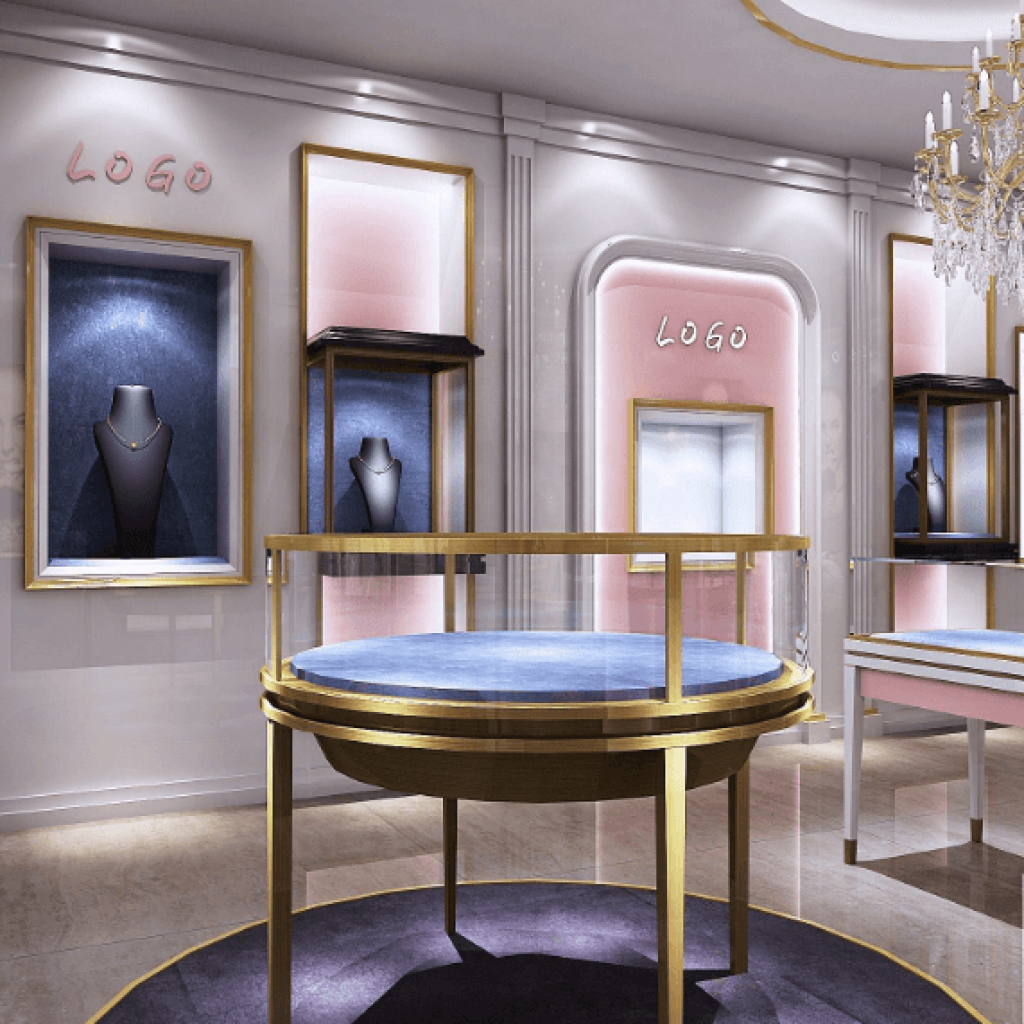
Define functional areas
When we first receive the floor plan, we should first mark out three core areas: the display area, the experience area, and the functional area. The display area should occupy 60% of the total space. This area is divided into regular displays, boutique displays, and interactive displays. The experience area should occupy 25% of the space. Place one or two comfortable sofas and a small coffee table on which you can place jewelry brochures. Only in a comfortable environment can customers have more time to fall in love with a piece of jewelry.
Select the color scheme and material.
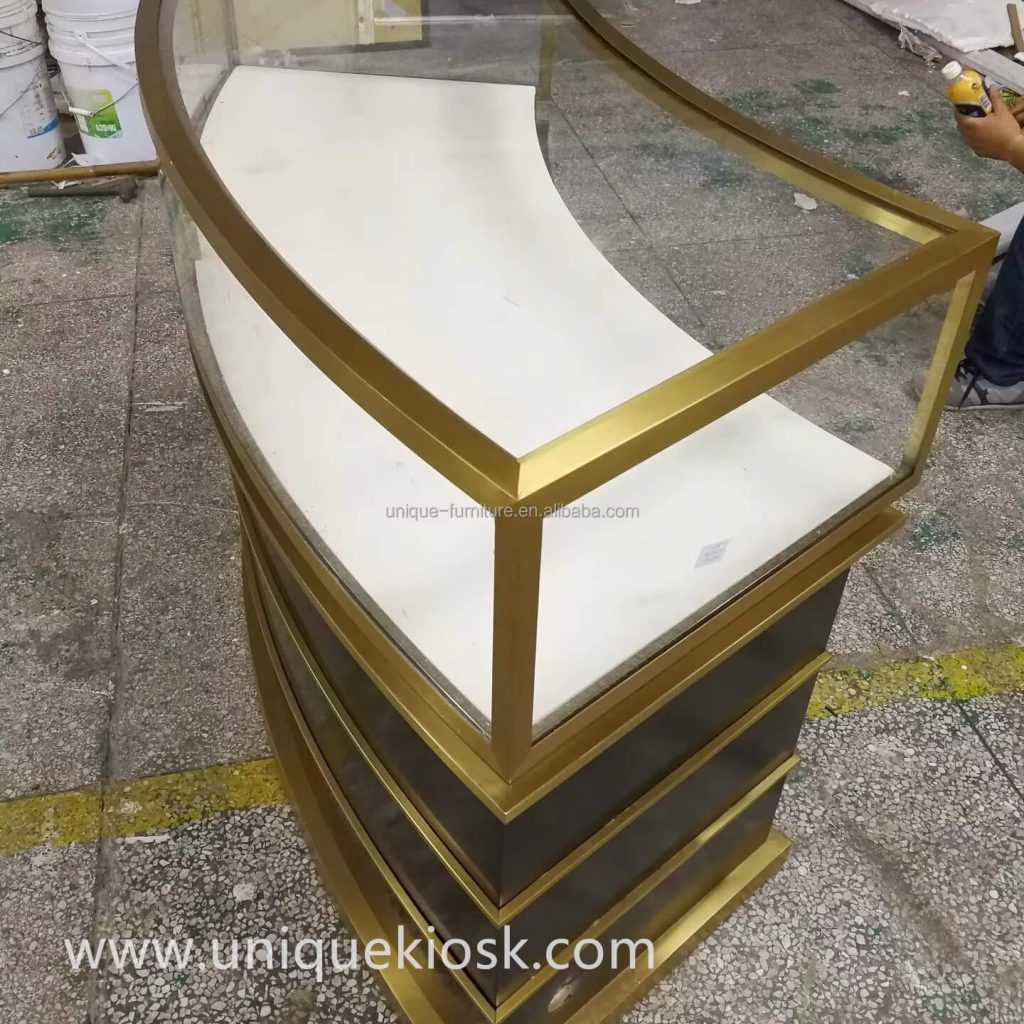
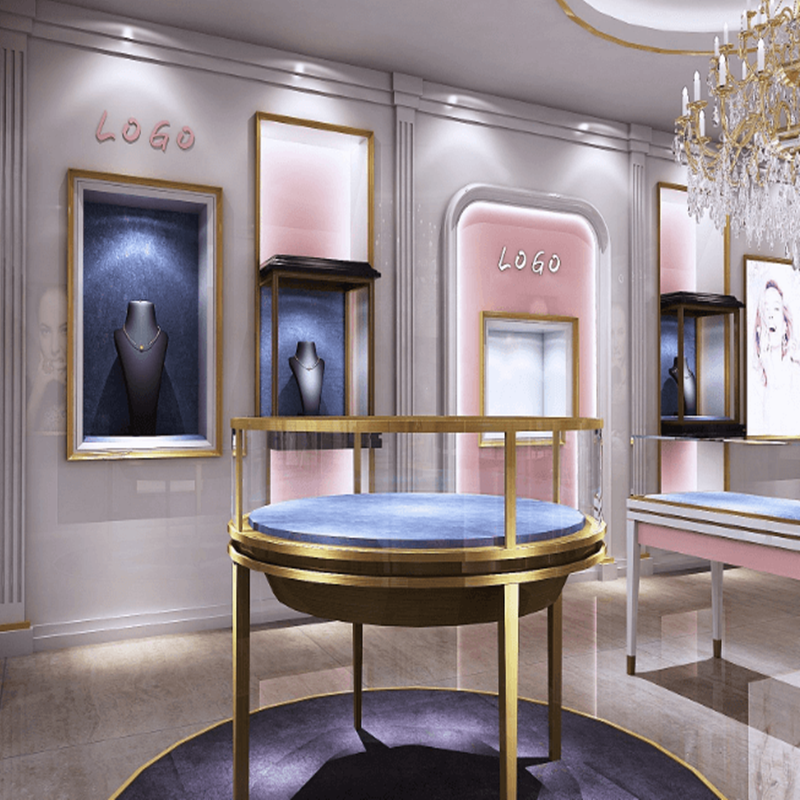
It’s important to avoid overly complex colors, as this can create a cluttered look. A maximum of three primary colors are acceptable. We have two recommended color combinations. The first is a light luxury style. We accent white lacquered cabinets with light gold details. Finally, we add transparent glass panels, and match them with warm white lighting to create a clean and bright overall look.
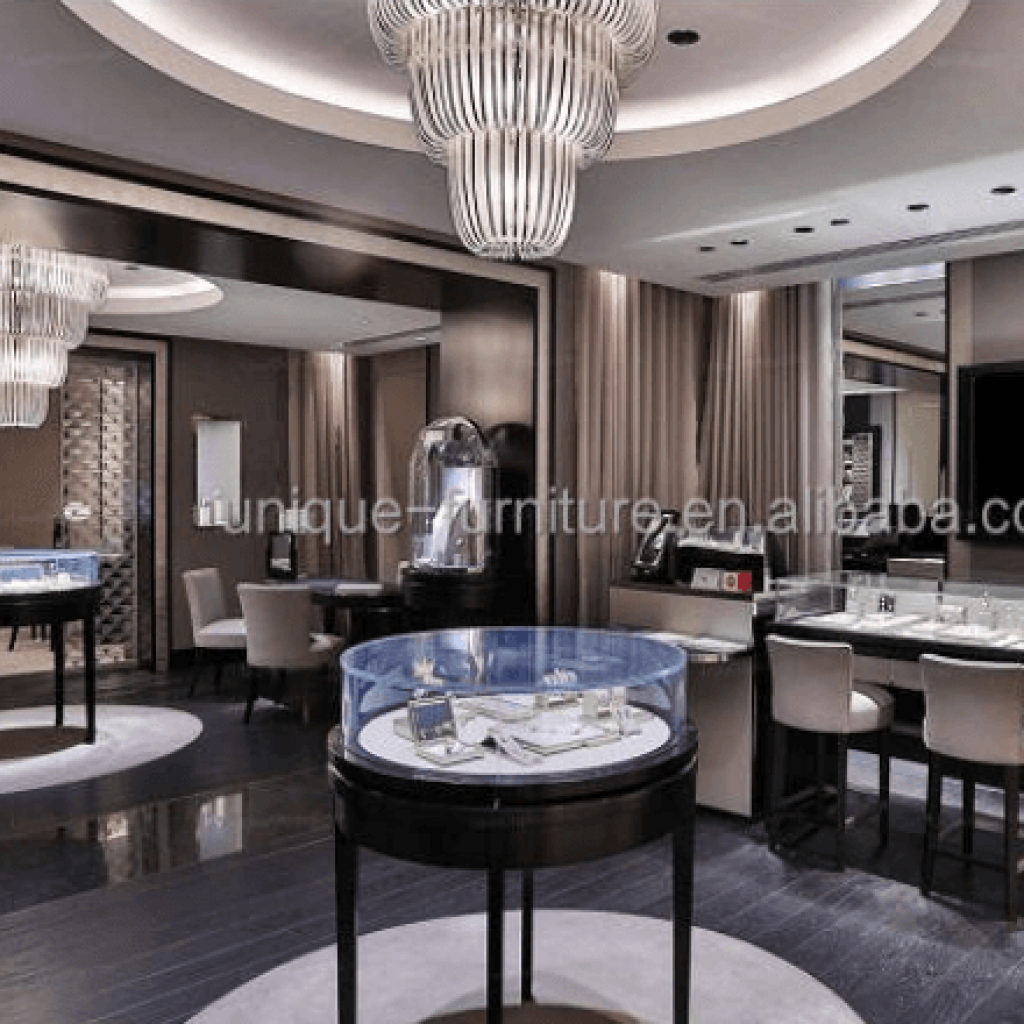
The second is a high-end style. Dark brown solid wood display cabinets are paired with black metal frames. Finally, velvet linings are added, and warm yellow lighting is used. This will highlight the luxury of the jewelry.
Lighting Design
Lighting design must adhere to these three key points to truly showcase the beauty of jewelry.First, we can install recessed spotlights inside the display case, placing one every 50 cm (approximately 20 inches) to avoid shadows. We also choose adjustable spotlights to precisely highlight the brilliance of the diamonds. Next, we should install track spotlights in the pendant display area.Choose adjustable spotlights to precisely highlight the brilliance of the diamonds. Finally, soft light boxes should be installed in the fitting area. Evenly lit, customers can see their true self when looking in the mirror.
Soft furnishings are less but better
Don’t overcrowd the space. Just choose two or three decorative pieces when decorating. Place a small dried flower in each display case to add a warm touch. Placing a few jewelry magazines in the experience area can enhance the brand’s professionalism.
Budget allocation: Focus on key points
For new jewelry shops, there’s no need to rush to achieve perfection all at once. We should first focus on the following aspects and prioritize our budget on these three areas. First, the display cases. Ideally, they should account for 40% of the total space. Because they serve as a stage for the jewelry, they should be made of durable materials. Next, there’s the lighting, which accounts for 20% of the budget. Because good lighting enhances the quality of jewelry, I believe this expense is essential. Finally, the furniture for the experience area accounts for 15% of the budget.As mentioned earlier, we can place comfortable sofas to extend customers’ stay time, which helps increase the likelihood of a successful sale. We can save the remaining budget for future store upgrades—for example, we can add an LED screen to showcase the story behind the brand’s jewelry.
The last 2 pitfalls to avoid
Before signing the decoration contract, we asked the manufacturer to hand over the 3D renderings to us, and finally confirmed the lighting position and display cabinet layout before starting work.
The height of the display cabinet should not exceed 1.5 meters (about 5 feet). A display cabinet that is too high will make customers stand on tiptoe to view it, affecting the experience.
In general, designing a jewelry store isn’t that complicated. The most important thing is to consider customer needs first, and then we can polish the details. Shop owners, follow these five steps, and even beginners can create a beautiful and profitable jewelry store.
If you’re still struggling with “how to determine the display case size” or “how to choose the material and style of the display case,” please leave a comment in the comments section and I’ll respond!