6 Decorations to Make Your Jewelry Store Outstanding
Before start jewelry store, it’s a great option to choose suitable decorations. It highly matches your brand concept and can also leave deep impression on clients. Whether you plan to open jewelry shop in the shopping mall, street or exhibition, choose perfect jewelry shop decoration helps a lot. Now, let’s view decorations elements affect the jewelry store effects.
1. Strategic Lighting Design
Lighting is the single most critical element in jewelry store design. It is the magic to brings gems to life, making diamonds sparkle, gold glow, and colors radiate with intensity. However, effective lighting is a nuanced science of layering different light types to create an atmosphere of luxury and precision. The goal is to mimic the ideal conditions under which a gemstone is graded. Ensuring every piece is seen in its most flattering light. Poor lighting can make even the most exquisite collection appear dull and lifeless.
First, ambient lighting provides the overall illumination of the space, setting a comfortable baseline light level. This is often achieved with subtle recessed ceiling lights or soft cove lighting. Second, task lighting is focused on specific areas, such as the sales counter where paperwork is handled. The third is accent lighting. Track lights or LED spotlights are industry standards. Precisely angle a beam of light onto each piece. It creates brilliant highlights and deep, dramatic shadows define a gem’s facets.
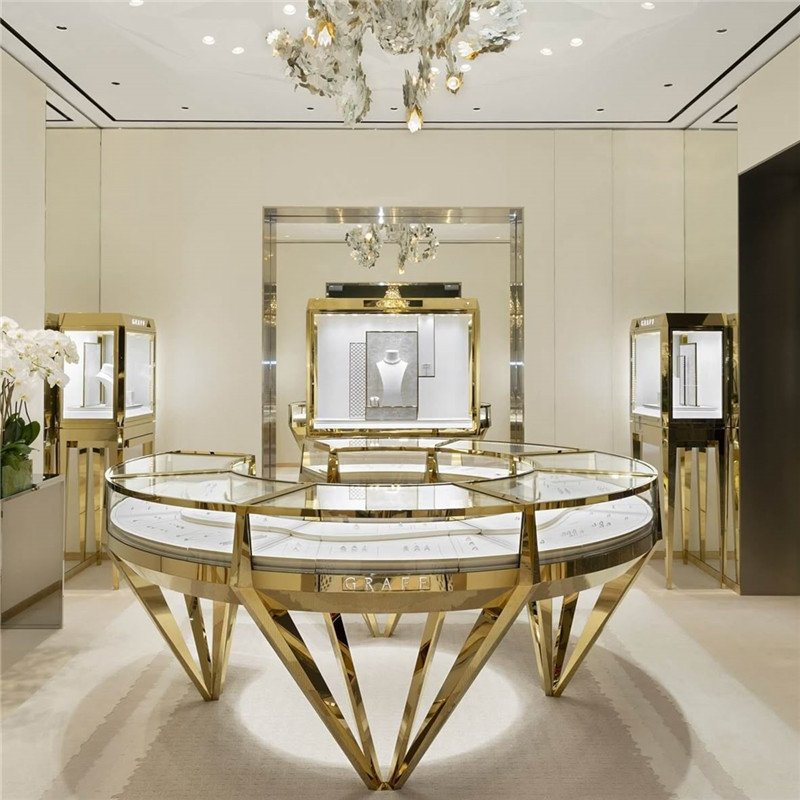
Beyond the technical specs, consider the color temperature of your bulbs. A cool, bluish-white light can enhance the fire in diamonds. While a slightly warmer light can enrich the warmth of yellow gold and rose gold. A stunning, sculptural chandelier above a central display case or elegant, minimalist pendant lights over the counters can serve as a powerful branding element. These fixtures should complement your store’s aesthetic. View jewelry shop design
2. Luxury Material Selection
The materials you use for surfaces, flooring, and fixtures communicate tangible quality before a customer even sees a piece of jewelry. In a high-end environment, every surface a client touches or sees must reinforce a message of sophistication and permanence. The choice of materials directly influences the perceived value of your products. A diamond ring displayed on a cheap laminate countertop will feel less valuable than the same ring presented on a sleek slab of marble or rich, matte-finish granite.
Focus on materials feel substantial and authentic. Natural stone like marble, granite, or quartzite offers unique veining and a cool, solid touch that speaks to luxury. High-gloss lacquers in deep, rich colors can create a modern and dramatic backdrop, making metallic finishes pop. For flooring, consider wide-plank hardwood, polished concrete, or large-format porcelain tiles. Offer both durability and a clean, expansive look. The feel of the flooring underfoot contributes to the sensory experience. Whether it’s the softness of a high-quality wool carpet in a private viewing area or the solid click of heels on stone. Check jewelry store furniture
Material selections should form a cohesive story that aligns with your brand identity. A store specializing in vintage Art Deco pieces might opt for dark walnut wood, brass accents, and velvet. While a boutique focusing on contemporary minimalist designs would benefit from pale oak, polished chrome, and clean white surfaces. The material on the sales counter, the frame of the display cases, and even the hardware on the doors feel like part of a single, carefully considered collection.
3. Elevated Display Cases
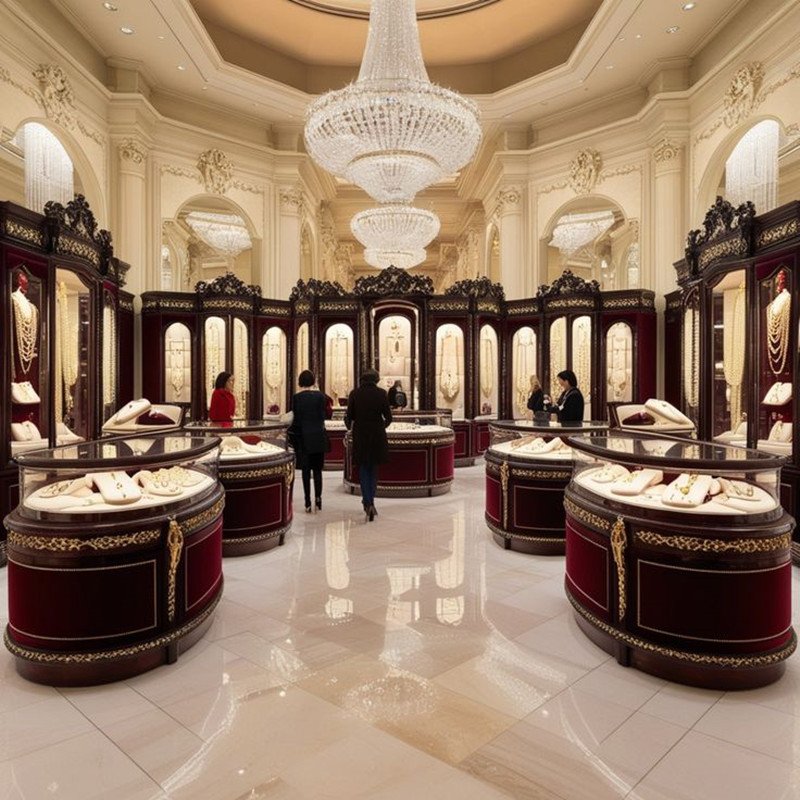
The display case is the sanctum sanctorum of the jewelry store, protective barrier and the stage for your most important assets. The design and condition of these cases are therefore paramount. An outdated, poorly lit, or cluttered case can detract significantly from the beauty of the merchandise inside. Modern jewelry cases are engineering marvels designed not just for security, but for optimal presentation. They are tools to focus attention, minimize distractions. And present each piece as a work of art worthy of singular admiration.
When selecting or updating display cases, prioritize clean sightlines and minimalist frameworks. Thin, barely-there glass seams and low-iron, anti-reflective glass are essential investments. This type of glass is crystal clear, eliminating the greenish tint of standard glass and reducing glare, which allows for an unobstructed view of the jewelry. The interior of the case is just as important. Use high-quality, neutral-toned liners like suede, microfiber, or matte acrylic. These materials provide a soft, non-reflective background that lets the jewelry take center stage. The internal lighting must be flawless, typically achieved with discreet, cool-white LED strips. Evenly illuminate the contents without creating hot spots or shadows.
Thoughtful merchandising within the jewelry display case is the final step. Give each piece room to breathe. Use tiered stands, elegant busts, and ring trays to create varying heights and visual interest. This organized presentation makes it easier for customers to browse and signals a curated, expert selection. Remember, the display case is a direct reflection of the value of its contents. A pristine, beautifully organized case commands respect and elevates the perceived worth of everything inside it.
4. Engaging Brand Storytelling
In an era where consumers seek connection and meaning, a jewelry store that relies solely on shiny objects is at a disadvantage. The most memorable stores weave their brand’s narrative directly into the physical space. This is about moving beyond mere decoration to creating a branding environment, and the craftsmanship behind your pieces. This emotional connection transforms a customer’s visit from a shopping trip into an engaging experience.
There are numerous ways to integrate storytelling into your decor. If your brand has a heritage, create a “history wall” with framed photographs, old tools, or original sketches that chart your journey. If your focus is on artisan craftsmanship, consider a live workshop area visible from the main sales floor. Where customers can watch a jeweler at work. This provides a fascinating spectacle and offers transparent proof of the skill and labor involved. For brands centered on specific gemstones or ethical sourcing, use elegant informational plaques or digital screens to share the journey of a gem from mine to market. Emphasizing your commitment to quality and responsibility.
Build a story through aesthetic themes. A store inspired by the ocean might use a palette of blues and greens. With wave-like forms in the furniture and organic, shell-inspired displays. Every decorative element should feel like a chapter in the same book. Like the art on the walls, the music playing, the coffee table books left on a side table. This cohesive narrative gives customers a reason to remember you beyond the products you sell. Positioning your store as a brand with depth and character.
5. Inviting Customer Comfort
Modern luxury, however, is increasingly defined by comfort, hospitality, and a sense of ease. By dedicating significant thought and space to customer comfort, you signal that you value the client’s time and well-being, not just their purchase. A comfortable customer is a relaxed customer, they more likely to spend more time in your store, build a stronger rapport with your staff, and make a significant investment.
Complement it with a comfortable seating area featuring plush armchairs or sofas, a low coffee table, and soft lighting. This creates a conversational setting for browsing collections. Discussing custom designs, or making important selections like engagement rings. In this area, the experience should mimic a high-end lounge. Offer premium beverages, and ensure the seating is arranged to facilitate private conversation. The materials here is tactile and inviting, soft leathers, warm woods, and perhaps a luxurious area rug.
Impeccable climate control, a clean and beautifully appointed restroom, and secure storage for customers’ coats and bags all contribute to a feeling of being well-cared-for. For families, a small, discreet area with a couple of books or quiet toys can make all the difference for a parent trying to focus on a purchase. By anticipating and catering to the client’s physical comfort, you build trust and goodwill, laying the foundation for a long-term relationship that extends far beyond a single sale.
6. Dynamic Focal Points
Every outstanding retail space needs a “wow” moment. A dynamic focal point captures attention immediately upon entry and creates a lasting impression. It is to stop customers in their tracks, ignite their curiosity, and encourage social sharing. In a jewelry store. Where items are often small in scale, a major focal point provides a necessary counterbalance of scale and drama. It serves as a powerful differentiator, making your store memorable in a competitive market and giving people a visual story to tell others.
A focal point can take many forms, depending on your brand identity. It is a breathtaking, custom-designed chandelier featuring cascading crystals hinting at the sparkle within your cases. For a more technological approach, a large-format digital art screen displaying slow-moving, abstract visuals related to gemstones or metallurgy can be mesmerizing.
The placement of this focal point is strategic. It is typically positioned centrally or in a key sightline from the entrance. Act as an introduction to the quality and creativity the customer can expect. It sets the tone and builds anticipation. This investment in a single, powerful decorative statement demonstrates confidence and a commitment to providing a truly exceptional environment.