How to Build a Wooden-Style Perfume Store in Malls
How does a wood-style perfume shop become a benchmark for both high-end aesthetics and commercial value in a shopping mall? The space construction of Hermès perfume counter dismantles the building logic of the wooden perfume shop in the mall from vision to experience, and each design interprets the subtle integration of wood elements and the perfume industry.
Selection of wood material
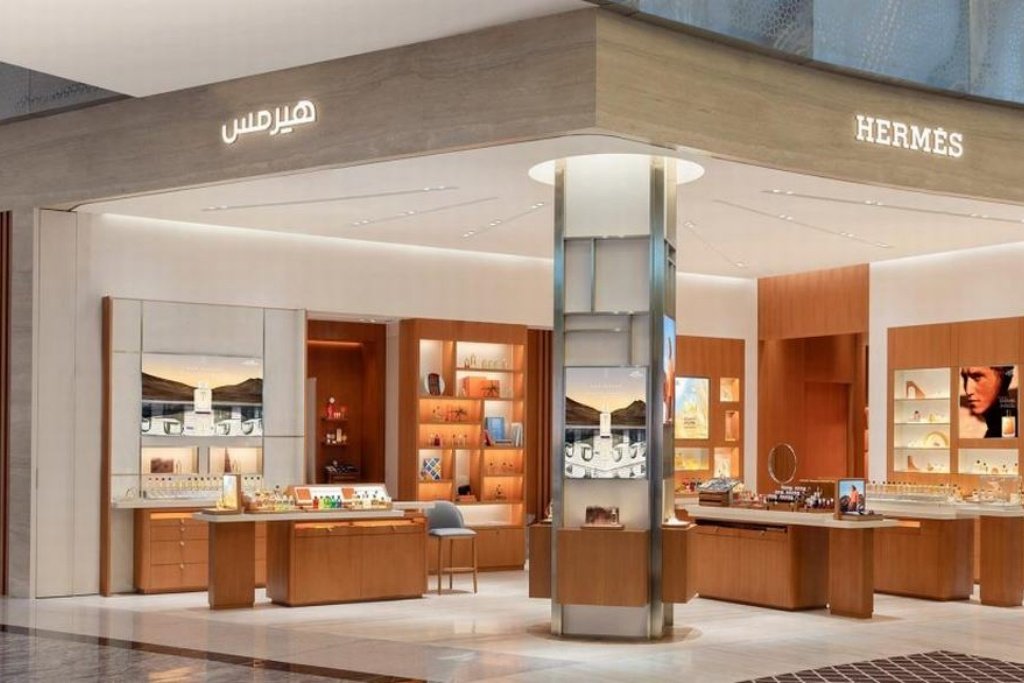
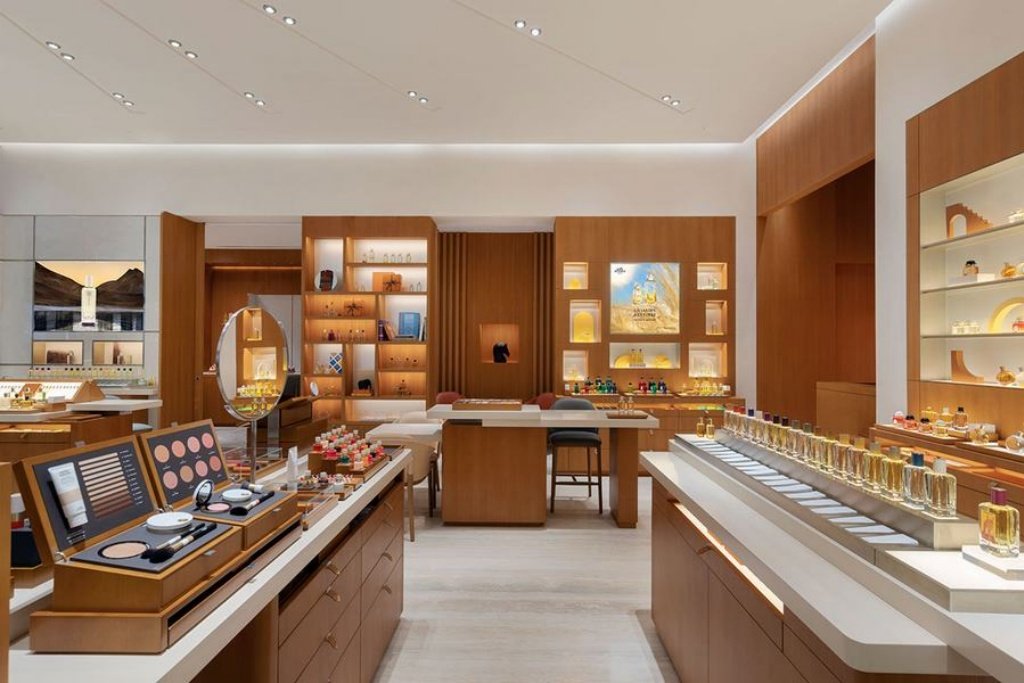
The first step in building a wood perfume shop in a mall is to choose the right wood material to convey the luxury tone of the brand. Hermes fragrance counter is made of northern cherry wood. Its natural warm brown texture is delicate and rich, which not only retains the original texture of the wood but also uses a precise drying and degreasing process to ensure that the material in the temperature and humidity of the environment for a long time has no deformation and no cracking. The density and hardness of the wood are appropriate for fine carving and stitching, in keeping with Hermès’ brand expression of craftsmanship.
From the professional dimension of commercial space, the color saturation of cherry wood is highly compatible with the display requirements of perfume products. The warm wood color softens the cold light of perfume glass bottles and makes the products look more moist and advanced visually. At the same time, the wood surface is treated with matte varnish, which not only retains the tactile temperature of the wood, but also resists the chemical erosion of perfume volatiles, achieving a balance between aesthetic presentation and practical durability. This is a high-end brand in the material selection of the typical professional considerations.
Spatial layout
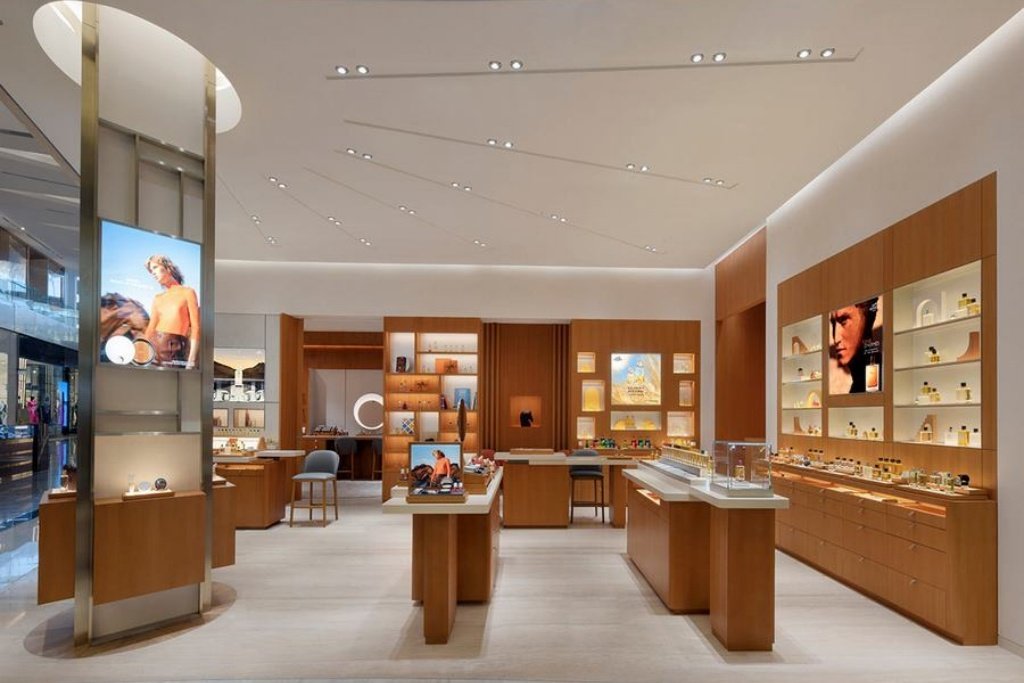
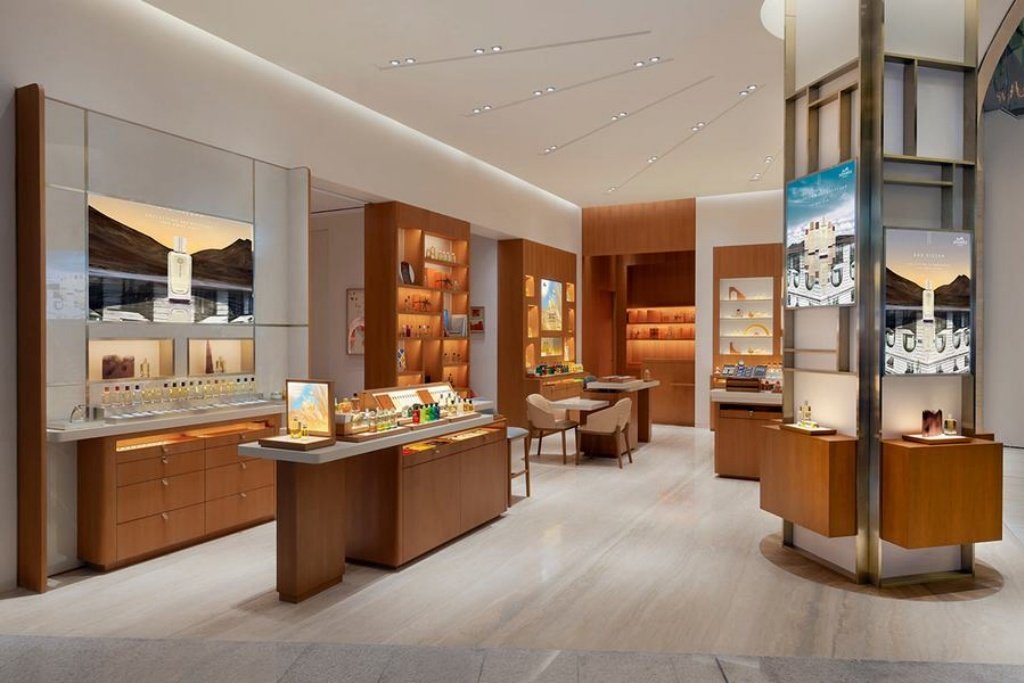
The spatial layout of wooden perfume shops in shopping malls needs to deeply fit the behavioral logic of perfume consumption. The Hermes counter is a circular design with a central display area and a peripheral experience area. The Wooden Island in the center focuses on limited-edition perfumes and new products. Its height is set at 850 mm; ergonomically, it allows the customer to browse comfortably without having to bend down and visually focus the space. The surrounding wooden display cabinets are divided according to the flavor classification, and the light brightness and color temperature of each partition are slightly different. Through visual cues, customers are guided to choose according to their flavor preferences, and the efficiency of consumption decision-making is improved.
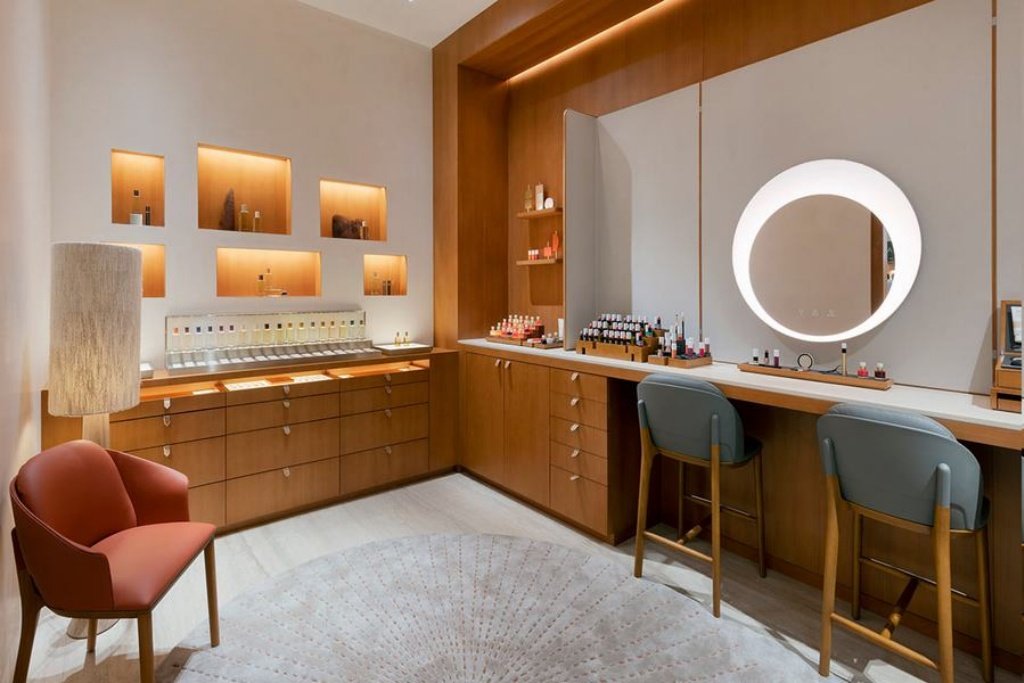
The wooden tables and chairs in the experience area are semi-enclosed, with a comfortable distance of about 2 meters from the display area, which not only ensures the privacy of customers when trying incense but also allows the staff to provide timely service. This kind of layout coincides with the dual needs of rational choice and perceptual experience in perfume consumption—the visual impact of Nakajima arouses interest, the logical guidance of the partition display assists decision-making, and the sensory immersion of the experience area leads to transaction, forming a complete closed-loop consumption line.
Lighting Design
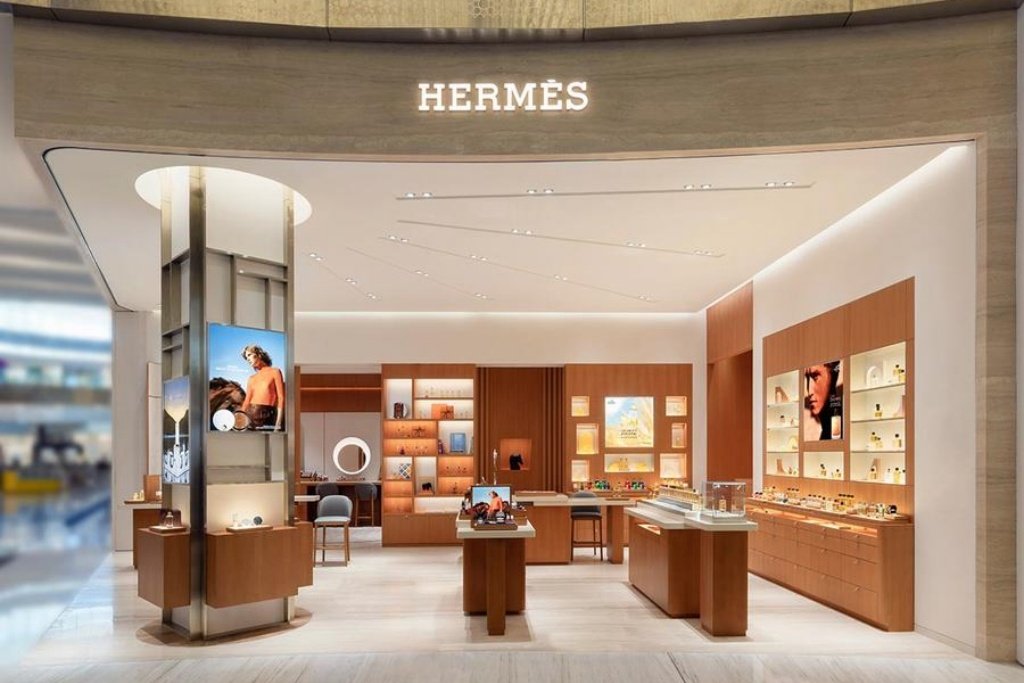
Lighting design is the key to creating the ambiance of a wooden perfume shop. The top of the Hermes cabinet is a combination of borderless linear lights and recessed spotlights. The linear lights are arranged along the edge of the grille of the wooden ceiling, forming a soft contour light that outlines the structural hierarchy of the wood. The spotlight is focused on the perfume display area; the color index reached more than 95 to ensure that the color and texture of the perfume are in the light of the real reduction. For example, the wood scent area uses a 3,000 K setting to blend warm light with a wood background, enhancing the warm tone of the scent, while the floral scent area uses a 3,500 K setting to add freshness and elegance.
The wooden cabinets on the walls have built-in recessed light strips that diffuse light from the bottom of the laminate, illuminating the fragrance products and highlighting the textured details of the wood through light and shadow contrast. This primary and secondary light and shade lighting logic, so that the wooden space will not appear impetuous due to excessive lighting and will not lack a senior sense due to insufficient light, is a perfect fit for the perfume industry, for the elegant atmosphere and product presentation of the dual requirements.
Display system
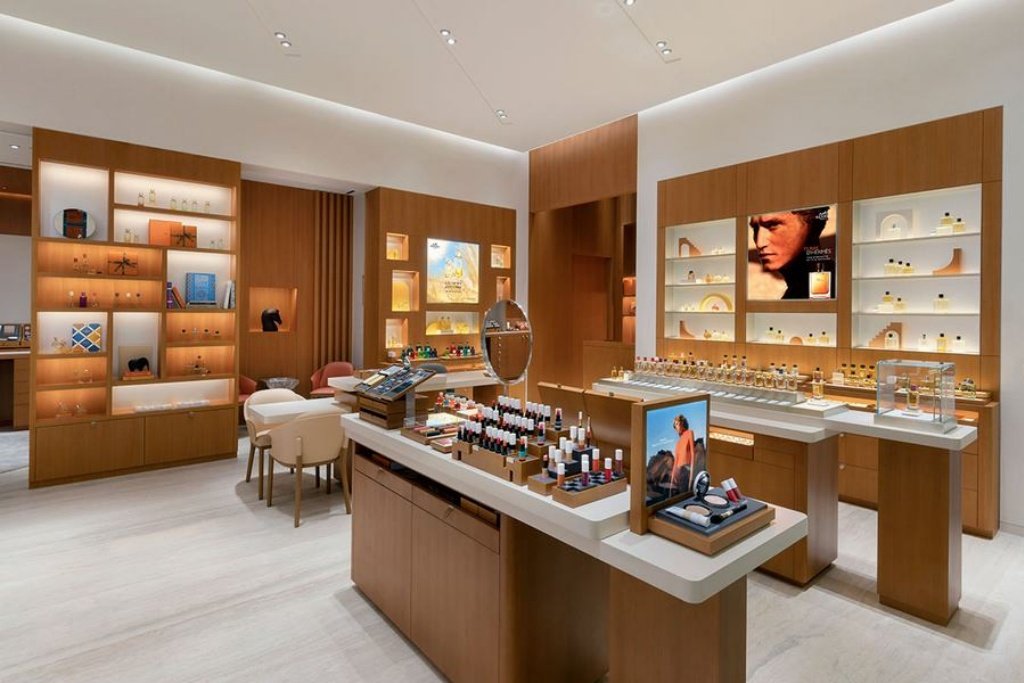
The design of the display system should achieve the aesthetic resonance between the wooden carrier and the perfume product. Hermes’ wooden cabinets are designed with modular shelving and customized grooves. The spacing of shelving strictly corresponds to the height of different perfume bottles, ensuring that each bottle can be upright and prominently displayed The arc of the groove is precisely fitted with the bottom contour of the perfume bottle, preventing the product from dumping and forming the visual effect of the product embedded in the wood, which strengthens the sense of integration of the material and the product.
The display uses storytelling method to combine perfume with brand scarves, scented candles, and other surrounding wooden trays, which not only enriches the display level but also conveys the brand’s lifestyle concept. This kind of display logic makes the wooden showcase no longer a simple shelf, but an art exhibition stand for perfume products, which creates a consumption scene for customers to slow down and enjoy in the fast-paced environment of the mall.
Detailed workmanship
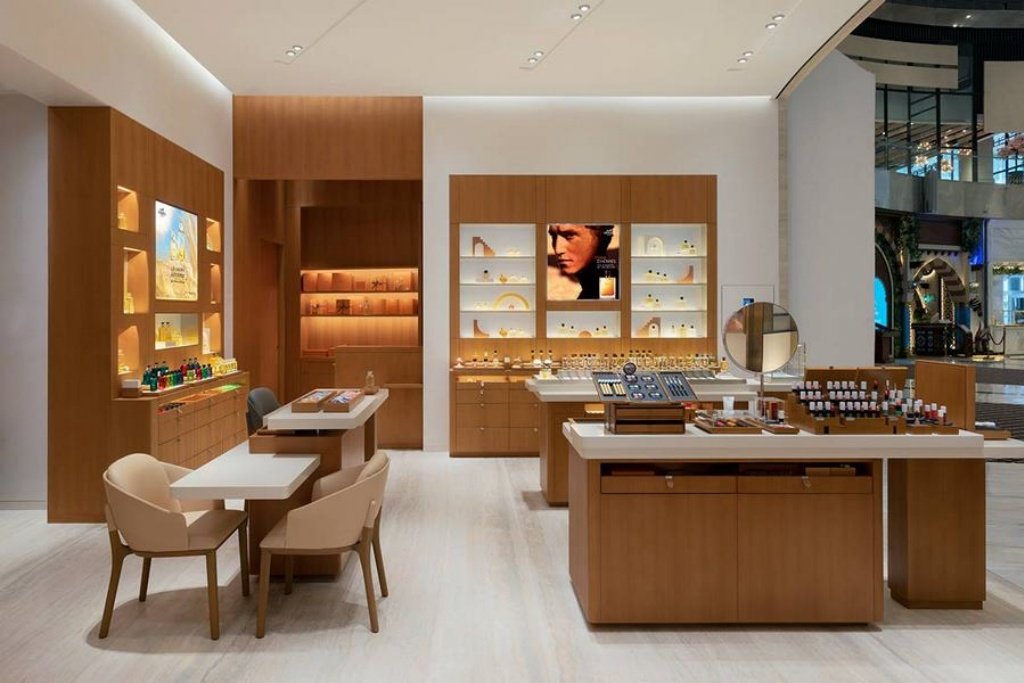
The details of the wooden perfume shop are the hidden business card of the brand’s luxury. The wooden seams of the Hermes cabinets are made of concealed tenons and glue, with no metal fasteners visible on the surface, allowing the texture of the wood to visually form a complete continuous surface; the drawer slides are made of custom-made silent damping tracks, and open and close friction and cushioning effects through repeated debugging ensure that customers who pull drawers feel a silky and thick sense of quality.
Metal accessories such as door handles and laminate brackets are made of brass. The color of its worn treatment and the warm brown of cherry wood form a retro and modern dialogue. The metal decoration in the details not only enhances the refinement of the space but also does not take away the visual focus of the wood and perfume. These craft details may seem small, but in the customer’s sense of touch and visual experience, they continue to strengthen the brand gene so that a wooden perfume shop in the mall of the same format stands out.
Cultural Fusion
A successful wooden perfume shop, the ultimate realization of cultural integration, so that the story of the formation of wood and perfume has narrative resonance. Hermes’ wooden space design incorporates the brand’s equestrian culture, such as the corner treatment of the display case, which borrows from the arc design of the harness, and the arrangement of the wooden grille, which implies the ventilation structure of the stable. These hidden cultural symbols echo the perfume’s blending story, allowing customers to immerse themselves in the history of the brand in the space.
At the same time, the natural properties of wood materials and the olfactory art of perfume also form a sensory complement—the warm touch of wood and the rich aroma of perfume together construct a dual sensory experience of touch and smell. This kind of experience is especially rare in the hard space of the mall and ultimately makes the wooden perfume shop a cultural landmark commercial space that customers are willing to stay in, explore, and even spread.
In the shopping mall business ecosystem, the creation of a wooden perfume shop is not a simple project of wood piling, but, like Hermès, through the multi-dimensional professional design of material, layout, lighting, display, technology, and culture, the warm texture of wood is transformed into the luxury expression of the brand and finally wins the visual focus in the competition of the mall. It also gains consumer recognition and becomes a space model with both aesthetic and commercial value.