How to Choose Mobile Phone Kiosk Materials Used in the UK?
Selecting the right materials for a mobile phone kiosk in a UK shopping mall is a critical business decision. It is a complex balancing act between brand image, durability, safety, cost, and compliance with stringent regulations. The chosen materials must withstand immense physical pressure from high footfall, resist constant cleaning, project a premium brand identity. Ensure the security of high-value inventory, all while operating within the unique commercial environment of a British shopping centre.
Understanding Mall Environment
The material selection for your kiosk must be predicated on a thorough understanding of this environment. Firstly, consider the immense footfall. A prime location in a centre like Westfield or the Trafford Centre means your structure will be subjected to constant contact, from accidental bumps by shoppers to deliberate leaning and touching. Materials must, therefore, be exceptionally scratch-resistant and impact-tolerant to maintain a pristine appearance. Secondly, mall environments are rigorously maintained, involving daily cleaning with industrial-grade chemicals. Your surfaces must be non-porous and immune to harsh cleaning agents to prevent staining, discolouration, or degradation over time.
Furthermore, the internal mall environment is carefully climate-controlled. Temperature and humidity fluctuations can still occur near entrances or in atriums. Materials must exhibit high dimensional stability. Meaning they will not warp, expand, or contract significantly with these subtle changes. Ensuring doors and drawers continue to function perfectly. Finally, the acoustic properties of materials can be a overlooked factor. A kiosk located in a quieter, premium department store corridor may benefit from softer materials that absorb sound. Creating a more intimate customer experience, whereas a main concourse unit might prioritise durability over acoustics. Understanding these operational parameters is the foundational step in making informed material choices. Check phone repair kiosk design
Prioritising Durability and Longevity
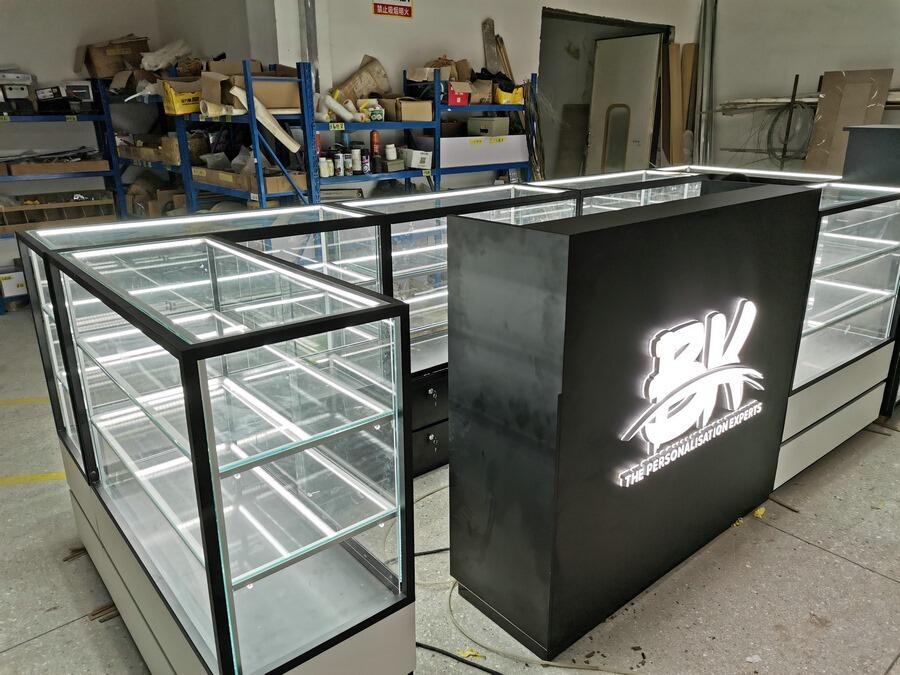
In a competitive retail setting, durability is an absolute necessity. The materials you choose directly dictate the kiosk’s lifespan, maintenance costs, and long-term return on investment. For the primary structural framework, powder-coated steel is the industry benchmark. The process involves applying a dry powder electrostatically and then curing it under heat. Creating a finish that is far more robust than standard wet paint. It is highly resistant to chipping, scratching, and fading. Ensuring the kiosk’s core structure remains sound and visually intact for years. For high-impact areas such as counter kick-plates or base panels. Stainless steel, particularly grade 304, offers superior resistance to dents, corrosion, and wear. View phone case kiosk design
For cladding and surfaces, High-Pressure Laminate (HPL) is an outstanding choice. Brands like Formica or Polyrey offer vast ranges of finishes, including realistic wood grains, metals, and solid colours. HPL is exceptionally resistant to impacts, abrasions, heat, and graffiti. Ideal for countertops and side panels. For an even more premium and resilient surface. Sintered stone or porcelain slabs are gaining traction. These ultra-compact materials are non-porous, virtually scratch-proof, and heat-resistant. Offering a luxurious feel with unparalleled durability. As they will quickly show signs of wear, requiring frequent and costly repairs or replacements that disrupt trading.
Balancing Aesthetics and Brand
A mobile phone kiosk must also serve as a powerful three-dimensional embodiment of your brand. The materials are the visual and tactile language that communicates your brand’s values to the customer. A brand like Apple prioritises a minimalist, premium aesthetic. Which is achieved through the use of milled aluminium, tempered glass, and sleek laminates. Conversely, a brand targeting a younger, more vibrant demographic might incorporate bold coloured acrylics or digitally printed graphic panels. The material choice must align with your brand book. The texture, gloss level, and colour must be consistent across all consumer touchpoints.
The interplay of materials is key to creating visual interest and guiding the customer journey. Using a combination of textures—such as a brushed metal frame, a glossy laminate counter, and a frosted glass display panel—can create a dynamic and sophisticated look. Lighting integration is also a material consideration. Back-painted glass can create a seamless illuminated sign, while perforated metal can conceal speakers or ventilation systems without compromising on style. It is advisable to request large physical samples of your shortlisted materials. Viewing them under mall lighting conditions (often a mix of natural and artificial light) is essential, as colours and textures can appear dramatically different than in a showroom or on a screen.
Ensuring Safety and Compliance
Adherence to UK building and fire safety regulations is non-negotiable. Mall management and local authorities will rigorously inspect your kiosk to ensure it meets all required standards, and material choice is at the heart of this compliance. Fire safety is the paramount concern. All materials used, particularly structural panels, cladding, and signage, must be Class 1 or Class 0 fire-rated as per British Standards. These classifications indicate very low flame spread and low combustibility, crucial for preventing the rapid spread of fire in a public space. Reputable kiosk fabricators will provide certificates of conformity for all materials used, and this documentation must be presented to the mall’s management team for approval before installation.
Safety extends beyond fire regulations. Structural integrity is vital. The kiosk must be incredibly stable to prevent any risk of tipping, often requiring it to be bolted to the mall floor. This means the base and frame materials must have immense structural strength. Edges and corners, especially at child height, should be rounded and smooth to prevent injury. Glass elements, if used in displays or shelves, must be tempered or laminated safety glass. This type of glass is engineered to crumble into small, granular chunks instead of splintering into sharp, dangerous shards upon impact. Prioritising these factors protects customers, staff, and your business from immense liability.

Evaluating Security and Protection
A mobile phone kiosk is a high-value target, housing thousands of pounds worth of easily portable stock. The materials chosen must form the first and most physical layer of a comprehensive security strategy. The primary display and storage areas must be constructed from materials that resist forced entry. This often means using reinforced panels and, most critically, incorporating laminated security glass for all display cases. Unlike standard glass, laminated security glass features a polyvinyl butyral (PVB) interlayer that holds the glass together even when shattered, making it extremely difficult to break through quickly and silently. The thickness of this glass (often 10mm or more) is a key deterrent.
For storage cabinets and locking mechanisms, the material quality is paramount. Drawers and doors should be constructed from heavy-gauge steel with internal hinges that cannot be easily tampered with. The choice of material also impacts the integration of electronic security systems. For instance, metal frames provide an excellent ground for anti-tamper alarms and allow for the discreet routing of cables for internal sensors. The material finish can also aid security; a scratch-resistant, non-porous surface like HPL or powder-coated steel is less susceptible to being compromised by attempts to drill or force locks. Every material selected must contribute to creating a secure shell that deters theft and protects your assets.
Managing Cost and Maintenance
Finally, the decision-making process must be grounded in financial reality. Budget constraints are a reality for every business, and material selection is where initial capital expenditure (CAPEX) meets long-term operational expenditure (OPEX). It is a classic case of “buy nice or buy twice.” Opting for cheaper, less durable materials like low-grade melamine or vinyl wraps may lower the initial build cost, but will inevitably lead to higher costs down the line through frequent repairs, patching, and ultimately, full replacement long before the end of your lease term.
Investing in premium materials like powder-coated steel, HPL, and security glass represents a higher initial CAPEX but results in significantly lower OPEX. These materials require minimal maintenance—typically just wiping down with a damp cloth—and will maintain their functional and aesthetic integrity for many years. This reduces downtime, avoids unexpected repair bills, and ensures your brand always presents its best face to the public. When budgeting, factor in the total cost of ownership, not just the initial fabrication invoice. A well-built kiosk from quality materials is a long-term asset, while a cheaply built one is a recurring liability that can damage brand perception.